Braked Vs Unbraked Towing Capacity Explained
Understanding braked vs unbraked towing capacity comes down to one key difference: whether the trailer has its own braking system. A vehicle can generally tow a heavier trailer when the trailer has compliant brakes, but the actual limit depends on the vehicle, towbar, trailer and other rated components.
For NSW drivers towing caravans, work trailers or farm equipment, knowing these limits helps keep the combination safe and within legal requirements.
What Does Braked Towing Capacity Mean?
Braked towing capacity means the maximum trailer mass a vehicle manufacturer allows the vehicle to tow when the trailer has a suitable braking system.
You will commonly see separate braked and unbraked figures in the vehicle owner's manual or manufacturer specifications. The braked figure is usually higher because the trailer's brakes help slow the load.
However, the advertised braked towing capacity is not automatically the amount you can safely load onto any trailer.
The loaded mass of a trailer must not exceed the lowest applicable capacity among the towbar and coupling, vehicle towing capacity, trailer carrying capacity and tyre ratings. Gross Combination Mass (GCM) can also restrict the combined loaded weight of the tow vehicle and trailer.
This matters for caravan owners and tradies because passengers, equipment, water, camping gear and cargo all add weight.
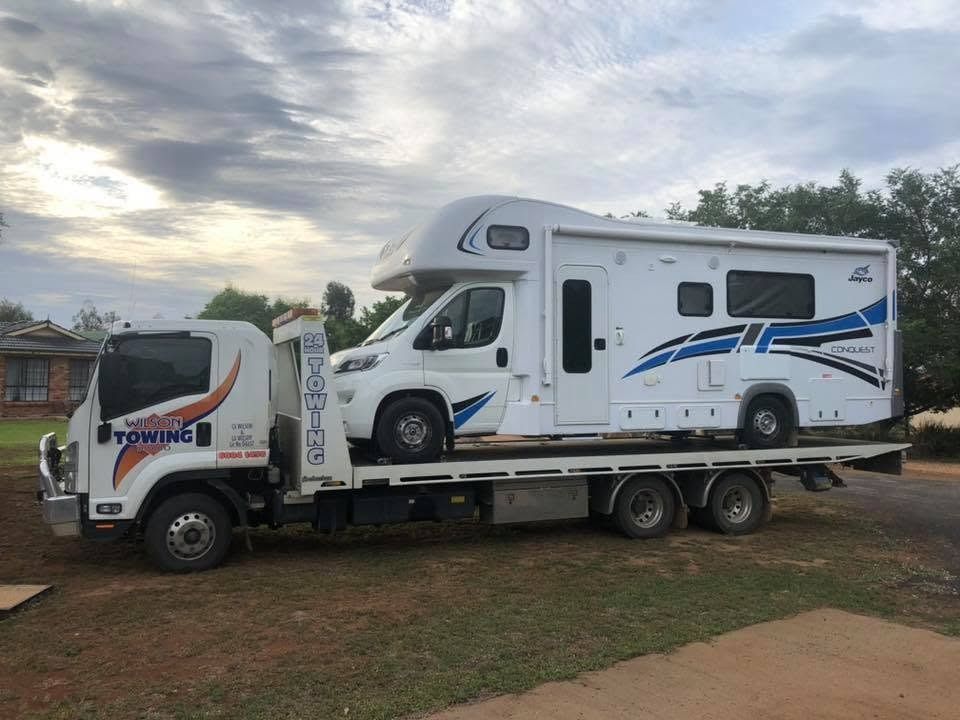
If you would rather have a caravan professionally moved than tow it yourself,
caravan transport in Dubbo can be a practical option for heavier or unfamiliar loads.
What Is Unbraked Towing Capacity?
Unbraked towing capacity is the maximum trailer mass your vehicle is rated to tow when the trailer does not have its own braking system.
In NSW, trailers with a Gross Trailer Mass (GTM) of up to 750 kg are exempt from the requirement to have brakes. From 751 kg to 2,000 kg GTM, brakes must operate on both wheels of at least one axle. More extensive braking requirements apply above 2,000 kg GTM.
That 750 kg threshold should not be confused with your vehicle's individual unbraked towing capacity. If the manufacturer specifies a lower limit, you still need to stay within it.
For example, a small work trailer may fall into a category where brakes are not required. But if its loaded weight exceeds the towing vehicle's unbraked rating, the 750 kg threshold does not override the vehicle's lower limit.
For local assistance with loads you cannot safely tow yourself, the towing Dubbo team can help.
How to Check Your Vehicle's Towing Limits
Before connecting a caravan, trailer or machinery trailer, check the ratings that apply to the entire combination.
While towing limits Australia wide are influenced by national vehicle and trailer standards, drivers also need to follow the road and towing requirements that apply in their state or territory. In NSW, that means checking the relevant NSW requirements as well as the ratings set by vehicle and component manufacturers.
- Check the vehicle specifications. Find the braked and unbraked towing capacities plus GVM and GCM where applicable.
- Check the towbar and coupling ratings. A component rated below the vehicle's towing capacity creates a lower limit.
- Check the trailer plate. Look for its ATM, GTM and tare mass.
- Allow for the real load. Tools, water, camping equipment, spare parts and machinery attachments add weight.
- Check component ratings. Tyres, couplings and other components must remain within their rated capacities.
A common mistake is looking only at the headline towing figure. A ute with a high braked towing capacity can still exceed another limit once you load the tray with passengers, tools and equipment.
Caravan owners can also read our caravan towing tips for beginners in NSW before setting out.
What Are the Legal Requirements for Towing in NSW?
NSW towing requirements cover more than the maximum capacity printed in your owner's manual. Your vehicle and trailer must be suitable, roadworthy and correctly equipped for the load.
Current NSW requirements specify these minimum braking requirements:
- 0–750 kg GTM: brakes are not required.
- 751–2,000 kg GTM: brakes must operate on both wheels of at least one axle.
- Over 2,000 kg GTM: brakes are required on all wheels, with additional braking-system requirements.
For trailers over 2 tonnes GTM, NSW requirements include brakes the driver can operate from the normal driving position. A breakaway system must also automatically apply the brakes if the trailer separates from the towing vehicle and keep them applied for at least 15 minutes.
Safety chains, couplings, registration, load security and roadworthiness also matter. Current NSW requirements specify at least one safety chain for trailers under 2,500 kg when loaded and two for trailers over 2,500 kg when loaded.
Because regulations can change, confirm current Transport for NSW requirements before caravan towing in NSW, particularly if the vehicle or trailer has been modified.
What Happens When a Load Exceeds Capacity?
An overloaded trailer can increase stopping distances and place additional stress on the towbar, coupling, tyres, suspension, brakes and drivetrain. Poor loading can also contribute to instability and trailer sway.
There is also a compliance issue. Vehicle manufacturers' towing limits should not be exceeded, while the loaded trailer must remain within the relevant ratings for the towing vehicle, towbar and coupling, trailer and tyres.
For example, a farmer may need to move equipment between properties. The machinery might physically fit on the trailer, but its weight combined with the trailer could exceed one or more ratings.
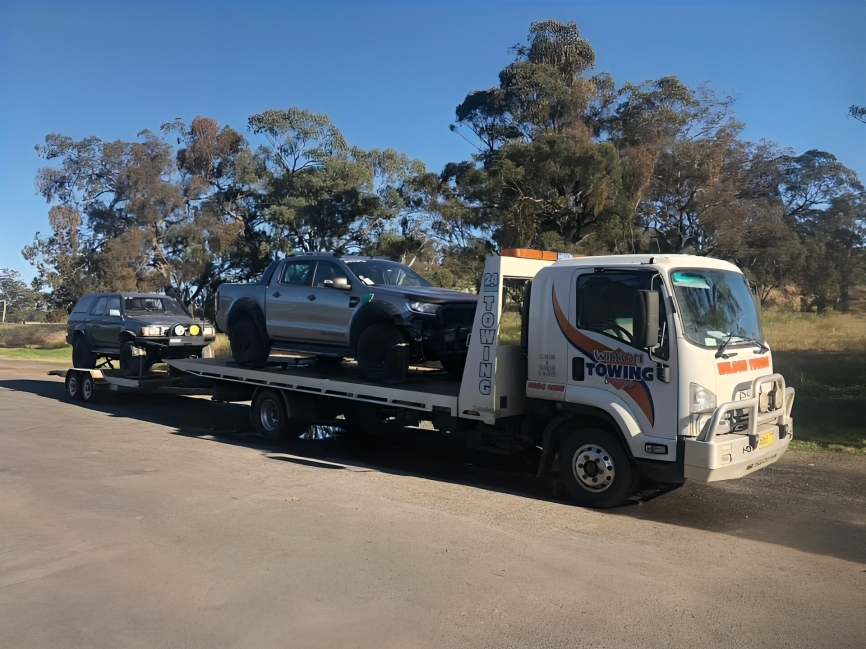
In that situation, using a properly rated transport vehicle is safer than trying to make the existing combination work. Wilson Towing Dubbo provides machinery transport in Dubbo for equipment that needs an appropriate transport solution.
How Can You Tow Caravans, Trailers and Farm Machinery Safely?
Safe towing starts before the vehicle moves. Know the loaded weight, check every applicable rating and make sure the trailer, brakes and towing equipment suit the job.
Before leaving, check:
- the vehicle and trailer are roadworthy
- tyres are suitable and correctly inflated
- trailer brakes work correctly where fitted
- lights and electrical connections work
- the coupling and safety chains are secure
- cargo cannot move or fall
- the combination remains within applicable weight ratings.
According to industry best practice, drivers should also allow greater braking distances, use smooth steering and braking inputs, slow before corners and regularly check tyres, couplings and secured equipment during the trip.
Farm machinery needs particular care because its shape and weight distribution can differ considerably from ordinary cargo. Caravans can also become substantially heavier once water, batteries, gas bottles, food and camping equipment are added.
If the numbers do not work, driving more slowly does not solve the underlying problem. The Wilson Towing Dubbo team can assist with towing and transport requirements around Dubbo.
The key takeaway is simple: your safe and legal towing limit depends on the applicable ratings across the whole combination, not just the largest number in your vehicle brochure. Check the vehicle, towbar, coupling, trailer, tyres, brakes and loaded weight before travelling.
Get in Touch
Not sure whether your caravan, trailer or machinery is suitable for your towing setup? For help with caravan towing NSW transport needs, machinery moves or heavier loads around Dubbo,
contact Wilson Towing Dubbo. You can also learn more about our
Dubbo towing service and choose an appropriate towing or transport solution for the job.
Frequently Asked Questions